Friday, January 30, 2026
Home Blog

Border Czar Tom Homan Offers Minneapolis ‘Drawdown’ in Exchange for Local Cooperation

MINNEAPOLIS — In a sudden shift from the “maximum pressure” rhetoric that has defined Operation Metro Surge, President Trump’s newly deployed “border tsar,” Tom Homan, offered a conditional olive branch to Minnesota officials on Thursday: federal agents will begin a withdrawal from city streets, but only if local jails reopen their doors to federal immigration detainers.

Standing before a bank of microphones for his first press conference since arriving in the Twin Cities, Homan—a veteran law enforcement officer known for his hardline stance—presented himself as a “fixer” sent by the President to clean up a mission that has spiraled into bloodshed.

“The withdrawal of law enforcement resources here is dependent upon cooperation,” Homan said. “Give us access to illegal aliens and public safety threats in the safety and security of a jail, and you won’t need thousands of agents on your street corners.”


The ‘Bovino Era’ Ends in Bloodshed

The deployment of Homan marks a strategic demotion for Gregory Bovino, the Border Patrol commander whose “Napoleon-like” leadership and aggressive street tactics were blamed for the deaths of two U.S. citizens—Renee Good and Alex Pretti—this month.

While Homan was careful not to explicitly condemn his predecessor, his remarks were a thinly veiled critique of the chaos that has engulfed South Minneapolis.

“I’m not here because the federal government has carried out this mission perfectly,” Homan conceded. “President Trump wants this fixed, and I’m going to fix it. We’re going to do it smarter, and we’re going to do it by the book.”


The Bargain: Jails for Streets

Homan’s proposal is a direct challenge to Minnesota’s “sanctuary” policies. Under the proposed “drawdown” plan:

  • The Carrot: Federal tactical units would be redeployed away from residential neighborhoods and commercial corridors like “Eat Street.”
  • The Stick: County jails must notify ICE of release dates for “public safety risks” and allow federal agents access to interview detainees.
  • The Targeted Shift: Homan signaled a move away from indiscriminate street stops toward “targeted strategic enforcement,” focusing on what he called the “worst of the worst.”

Homan claimed that Attorney General Keith Ellison had already signaled some willingness to discuss release notifications for high-level threats—a potential crack in the unified front of Minnesota’s Democratic leadership.


A ‘National Shutdown’ Looms

Despite Homan’s pragmatic tone, the atmosphere in Minneapolis remains electric. Protesters, fueled by the viral footage of Alex Pretti’s final moments, have ignored the subzero temperatures to maintain a 24-hour vigil outside the Whipple Federal Building.

The Tensions on the Ground:

  • Judicial Rebuke: On Wednesday, a chief federal judge condemned ICE for violating nearly 100 court orders during the operation.
  • National Shutdown: Activists have called for a nationwide strike this Friday to demand the total expulsion of federal agents from the state.
  • Local Resistance: Mayor Jacob Frey, while meeting with Homan, reiterated that the city’s resources would not be used to “tear families apart.”
Key PlayerStatusStance
Tom HomanBorder Tsar“Seek solutions” through jail access; will not “surrender the mission.”
Tim WalzMN GovernorMet with Homan; agreed on the need for “ongoing dialogue.”
Keith EllisonMN Attorney GeneralLitigating to end the surge while discussing public safety release alerts.
Jacob FreyMinneapolis MayorDemanding an immediate end to “masked, heavily armed” street patrols.

The Homan Doctrine

By sending Homan, Trump is betting that a “tough but fair” veteran can achieve the administration’s deportation goals without the PR disaster of more dead American citizens. Homan’s “Jailhouse Pivot” is a gamble that local leaders, exhausted by the civil unrest and the financial strain of the “siege,” will trade their sanctuary principles for a return to normalcy.

As the first units of federal agents were seen packing gear into transport vans late Thursday, the question remains: is this the beginning of the end of the Minneapolis crackdown, or merely the start of a more invisible, institutionalized phase of the surge?

China Executes 11 Members of Notorious Myanmar ‘Scam Mafia’

WENZHOU, CHINA — The reign of terror for one of Southeast Asia’s most feared criminal dynasties officially ended at dawn on Thursday.

In a stark demonstration of Beijing’s “zero-tolerance” policy toward cross-border crime, China executed 11 members of the notorious Ming family syndicate. The group, which operated a multi-billion dollar empire of cyber-scam compounds, illegal casinos, and torture chambers in northern Myanmar, was found guilty of orchestrating a criminal enterprise that led to the deaths of at least 14 Chinese citizens.

The executions, carried out by the Wenzhou Intermediate People’s Court in Zhejiang province, follow the final approval of the Supreme People’s Court in Beijing. It marks the most severe blow yet in a years-long campaign to dismantle the “scam factories” that have proliferated across the lawless borderlands of Myanmar’s Kokang region.


Inside the ‘Crouching Tiger’ Empire

The Ming family was one of the “four great clans” that effectively governed Laukkaing, a town transformed from a remote backwater into a glitzy, neon-lit hub of sin. Under the leadership of patriarch Ming Xuechang—who reportedly committed suicide in 2023 to avoid capture—the family built an industrial-scale criminal infrastructure.

The Syndicate’s Portfolio:

  • Billion-Dollar Fraud: The court confirmed the group raked in more than 10 billion yuan ($1.4 billion) since 2015 through telecom fraud and “pig-butchering” scams.
  • Armed Protection: Unlike typical street gangs, the Mings operated as a paramilitary force, employing armed militias to guard their “Crouching Tiger Villa” compound.
  • Human Trafficking: Thousands of workers, many of them Chinese nationals, were lured by fake job offers, only to be detained, beaten, and forced to conduct scams under the threat of death.

The ‘Blood Debt’ of 14 Lives

While the financial crimes were staggering, it was the “intentional homicide” and “violent injury” charges that sealed the fate of the 11 defendants. The court detailed a harrowing pattern of brutality used to maintain discipline within the compounds.

“The crimes committed were extremely serious, the circumstances particularly egregious, and the consequences devastating to society,” the Supreme People’s Court ruled in its final review.

Name of ExecutedRole in Syndicate
Ming GuopingSon of patriarch; leader of armed border guard force.
Ming ZhenzhenGranddaughter; key manager of financial and scam operations.
Zhou WeichangHigh-ranking operative; oversaw compound security.
Wu HongmingKey financier and logistics coordinator.
Luao JianzhangSenior manager of telecom fraud divisions.

The court also sentenced five others to death with a two-year reprieve (typically commuted to life imprisonment) and handed down life sentences to 11 additional associates.


A Message to the ‘Four Families’

The downfall of the Mings began in late 2023 when a surge in ethnic conflict in Myanmar allowed Chinese-backed militias to overrun Laukkaing, capturing the family members and handing them over to Chinese authorities in a high-profile border transfer.

The executions send a chilling message to the remaining mafia clans—the Bai, Wei, and Liu families—who have long enjoyed impunity through ties to Myanmar’s military junta. With the recent extradition of tycoon Chen Zhi from Cambodia and the sentencing of the Bai family ringleaders, Beijing is signaling that the era of the “untouchable” border warlord is over.


The Industrial Scale of Scams

The scale of the “scam park” industry has become a global security concern. Experts estimate that hundreds of thousands of people are currently held in similar compounds across Myanmar, Cambodia, and Laos. These centers have evolved from simple phone scams into sophisticated crypto-fraud operations that target victims in the West and across Asia.

As the 11 members of the Ming clan were granted a final meeting with their relatives before their sentences were carried out, the “glittering” city of Laukkaing stands as a ghost of its former self—a reminder that even the most lucrative criminal empires eventually face the butcher’s bill.

Minnesota Shootings: Federal Agents Placed on Leave as ‘Disarmed’ Footage Shreds Official Narrative

MINNEAPOLIS — In a stunning reversal that underscores the deepening crisis within the Department of Homeland Security, federal officials confirmed Wednesday that the agents involved in the fatal shooting of 37-year-old Alex Jeffrey Pretti have been placed on administrative leave.

The move marks a direct contradiction to the defiant stance taken by Border Patrol commander Gregory Bovino just days ago, when he insisted the agents remained “on the job” for their own safety. The shift comes as a government report obtained by CBS News and The Minnesota Star Tribune reveals that two agents—one from U.S. Border Patrol and one from Customs and Border Protection (CBP)—discharged their weapons during the Saturday morning encounter, firing a total of ten shots into the ICU nurse as he lay pinned to the frozen pavement.

“Standard protocol is finally being followed, but the delay in doing so speaks volumes about the initial attempt to shield these officers from accountability,” said Minnesota Attorney General Keith Ellison.


The Evidence Gap: Disarmed Before the Volley

The administrative leave follows the viral spread of multi-angle bystander videos that have largely dismantled the Trump administration’s initial claims that Pretti was a “would-be assassin” who “brandished” a weapon.

A forensic breakdown of the footage, supported by a preliminary CBP report sent to Congress, highlights a devastating sequence:

  • The Disarming: One video angle shows an agent in a gray jacket reaching into the scuffle and emerging with a handgun—later confirmed to be Pretti’s legally holstered weapon—before turning and running away from the fray.
  • The Fatal Volley: Roughly one second after Pretti was disarmed and while his arms were pinned by at least four other agents, a Border Patrol agent shouted “Gun! Gun!” and opened fire at point-blank range.
  • The Fallout: The internal government report notably makes no mention of Pretti reaching for or brandishing his firearm at any point during the confrontation.

A Leadership in Turmoil

The decision to sideline the agents coincides with a major shakeup in the federal command structure in Minnesota. Commander Gregory Bovino, who previously accused Pretti of attempting to “massacre law enforcement,” has been demoted and reassigned to a post outside the state.

While DHS Secretary Kristi Noem continues to face calls for her resignation from high-ranking Democrats, President Trump has attempted to “de-escalate” by deploying Border Czar Tom Homan to negotiate with Governor Tim Walz.

The Shifting Federal Stance:

  • Saturday: DHS labels Pretti a “domestic terrorist” who violently resisted a disarming attempt.
  • Monday: White House aide Stephen Miller defends the shooting as a thwarted assassination attempt.
  • Wednesday: DHS retracts the “massacre” claim, citing a “chaotic scene,” and places the shooters on leave.

The ‘National Shutdown’ Looms

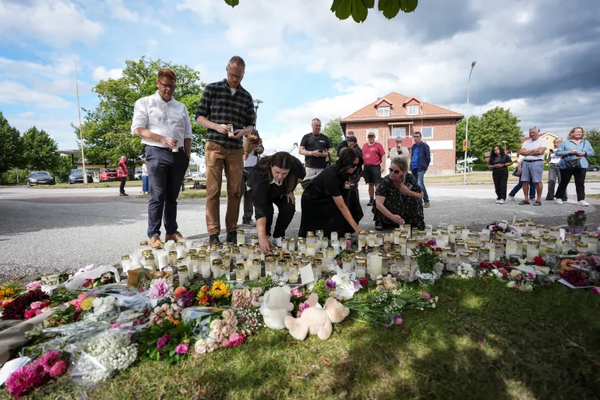
As the agents head to leave, the city they left behind remains a fortress. A memorial for Pretti at the corner of 26th and Nicollet continues to grow, fueled by a community that sees his death as the pinnacle of “Operation Metro Surge” excesses.

Activists have called for a “National Shutdown” this Friday to protest the continued presence of federal tactical units in American cities. Meanwhile, nearly 100 Twin Cities food shelves have signed a letter warning that the federal “siege” has left thousands of residents too terrified to leave their homes for basic necessities.

Officer StatusAgencyAction Taken
Agent 1U.S. Border PatrolAdministrative Leave (Fired Glock 19)
Agent 2CBP OfficerAdministrative Leave (Fired Glock 47)
Gregory BovinoBorder Patrol CommandDemoted / Removed from MN
HSI UnitInvestigationsLeading internal probe (amid conflict of interest claims)

The Investigation Standoff

Despite the agents being placed on leave, a jurisdictional war remains. The Minnesota Bureau of Criminal Apprehension (BCA) is still being denied full access to federal evidence, including the specific government vehicle where Pretti’s cleared firearm was reportedly stored by agents immediately after the shooting—a move legal experts say may have compromised the chain of custody.

As the sun sets over a boarded-up South Minneapolis, the “standard protocol” of administrative leave has done little to quiet the demands for criminal charges. For a city that has seen this script before, the question is no longer whether the agents are on leave, but whether they will ever return to a badge.

Starbucks Scraps CEO’s Private Jet Cap Amid ‘Credible Threats’

Starbucks Corp. is loosening the purse strings on its most controversial executive perk, mandating that Chief Executive Officer Brian Niccol fly exclusively via company jet for all travel—business and personal—while effectively handing him a blank check to do so.

In a regulatory filing released late Monday, the coffee giant disclosed that its board has eliminated a previous $250,000 annual cap on Niccol’s personal use of corporate aircraft. Under the revised agreement, the “super-commuter” CEO—who famously refused to relocate from Newport Beach, California, to the company’s Seattle headquarters—will no longer be required to reimburse the firm for personal flights.

The move transforms what was once a highly scrutinized allowance into a mandatory safety protocol, citing an increasingly volatile “threat landscape” for high-profile American executives.


A Security-First Mandate

The board’s decision followed a comprehensive security review conducted by a global risk management firm. The study cited “enhanced media attention” and the existence of “credible threat actors” targeting the CEO as the primary drivers for the policy shift.

By requiring Niccol to use the company’s Gulfstream G550 for every trip, Starbucks joins a growing list of U.S. corporations tightening executive protections following the fatal shooting of UnitedHealthcare CEO Brian Thompson in Manhattan late last year.

“This wasn’t a decision about luxury; it was a decision about the physical safety of our principal,” a Starbucks spokesperson said. “The board determined that the risks of commercial travel, even in first class, had become unacceptable given the current environment.”


The $31 Million Man

The jet policy update arrived alongside disclosures of Niccol’s compensation for fiscal 2025. While his total pay package of $31 million is a significant drop from the $95.8 million “mega-grant” he received upon signing in 2024, the underlying costs of maintaining his lifestyle remain astronomical.

The Niccol Security & Travel Ledger (Fiscal 2025):

  • Total Security Costs: $1.1 million
  • Private Jet Usage: Just under $1 million
  • Temporary Housing: $370,000 (including tax-related costs)
  • Commute Distance: ~1,000 miles (Newport Beach to Seattle)

While the $250,000 hard cap is gone, the board has replaced it with a quarterly review process by the chair of the Compensation Committee to maintain a semblance of oversight.


A Sustainability Paradox

The decision has reignited a fierce debate over corporate hypocrisy. For years, Starbucks has marketed itself as an environmental leader, pledging to halve its carbon footprint by 2030 and famously banning plastic straws. Critics argue that facilitating a CEO’s weekly 2,000-mile round-trip commute via a carbon-heavy private jet—now without even a nominal financial limit—shatters that credibility.

“You can’t ask customers to pay extra for oat milk to ‘save the planet’ while your CEO is burning thousands of gallons of jet fuel to avoid a three-hour commercial flight,” said one environmental advocate on social media.


The Turnaround Gamble

Investors, however, seem willing to overlook the optics as long as the “Niccol Magic” works. Since taking the helm from Laxman Narasimhan, Niccol has been tasked with fixing a slumping U.S. business plagued by slow service and high prices.

On Wednesday, the company reported its first quarter of U.S. sales growth in two years, driven by successful holiday promotions and the viral success of the “Bearista” cup. The stock jumped nearly 6% on the news, suggesting that for Wall Street, a million-dollar jet bill is a small price to pay for a returning customer base.

As Niccol prepares for an intensive investor day on Thursday, he remains the most expensive “commuter” in corporate history—a leader whose safety, and carbon footprint, are now officially part of the Starbucks brand.

Trump Warns Iran ‘Time is Running Out’ as Massive Armada Hits the Gulf

In his most significant military escalation since returning to the Oval Office, President Donald Trump warned Tehran on Wednesday that “time is running out” for a new nuclear deal, revealing that a massive U.S. naval “armada” is now moving into position in the Persian Gulf.

The warning, delivered via a series of high-decibel posts on Truth Social, marks a perilous new phase in the administration’s “Maximum Pressure 2.0” campaign. Trump’s ultimatum comes as the USS Abraham Lincoln Carrier Strike Group arrived in the region, ending a months-long carrier gap and bringing the total U.S. troop strength in the Middle East to approximately 50,000 personnel.

“A massive Armada is heading to Iran. It is moving quickly, with great power, enthusiasm, and purpose,” Trump wrote. “Hopefully Iran will quickly ‘Come to the Table’ and negotiate a fair and equitable deal—NO NUCLEAR WEAPONS—one that is good for all parties. Time is running out, it is truly of the essence!”


‘Operation Midnight Hammer’ and the Threat of ‘Far Worse’

The President explicitly invoked “Operation Midnight Hammer,” the June 2025 joint U.S.-Israeli strike that targeted three major Iranian nuclear facilities with bunker-busting bombs. While Trump previously claimed those sites were “obliterated,” intelligence reports suggest Iran has attempted to reconstitute its enrichment capabilities in the months since.

“As I told Iran once before, MAKE A DEAL! They didn’t, and there was ‘Operation Midnight Hammer,’ a major destruction of Iran,” Trump warned. “The next attack will be far worse! Don’t make that happen again.”

The U.S. Demands:

  • Zero Enrichment: A total ban on domestic uranium enrichment on Iranian soil.
  • Missile Limits: Strict caps on Tehran’s ballistic and cruise missile stockpiles.
  • Regional Proxy Exit: An end to funding for groups like Hezbollah and the Houthis.
  • Recognition of Israel: New reports suggest this has been added as a core precondition for any permanent peace.

Tehran’s Response: ‘Fingers on the Trigger’

The reaction from Tehran was immediate and defiant. Iranian Foreign Minister Abbas Araghchi rejected the prospect of negotiations “under the shadow of a gun,” stating that diplomacy cannot take place in an atmosphere of threats and “excessive demands.”

“Our brave Armed Forces are prepared—with their fingers on the trigger,” Araghchi said in a televised address. Meanwhile, Iran’s mission to the UN issued a chilling reminder of past conflicts, warning that while Iran is open to dialogue, it would respond to an attack “like never before.”

“Last time the U.S. blundered into wars in Afghanistan and Iraq, it squandered over $7 trillion… Iran stands ready for dialogue based on mutual respect—but if pushed, it will defend itself.”


Trump on Iran

The Protest Shadow

The military buildup coincides with a brutal domestic crisis in Iran. Human rights organizations, including HRANA, confirmed this week that more than 6,200 people have been killed in the anti-regime protests that have gripped the country since late December.

Trump has leveraged the unrest, telling protesters “help is on the way” and using the regime’s crackdown as a justification for the fleet’s deployment. Critics in Washington, however, suggested the escalation might also serve as a distraction from the President’s own domestic controversies, including the fallout from the fatal federal shooting in Minneapolis.

Strategic AssetStatusLocation
USS Abraham LincolnActive / On StationPersian Gulf
F-15E Strike EaglesDeployedRegional Air Bases
THAAD & Patriot UnitsActiveAllied Gulf States
B-2 Spirit Stealth BombersOn StandbyDiego Garcia

The Brink of Conflict

The arrival of the carrier group effectively closes the “readiness gap” that reportedly delayed U.S. action earlier this month. With Secretary of State Marco Rubio confirming that 30,000 U.S. troops are currently within range of Iranian missiles, the margin for error in the Gulf has narrowed to zero.

Special Envoy Steve Witkoff hinted at the World Economic Forum in Davos that a deal “ought to happen,” but with both sides dug in, the “Armada” in the Gulf now represents the most significant threat of a full-scale Middle East war in a generation.

Democrats Issue Impeachment Ultimatum as Noem Defends Minnesota Bloodshed

The escalating crisis in Minneapolis has moved from the streets to the halls of Congress, as top House Democrats on Tuesday issued a blunt ultimatum to President Donald Trump: Fire Homeland Security Secretary Kristi Noem immediately or face a swift impeachment inquiry.

The demand follows the fatal weekend shooting of Alex Jeffrey Pretti, a 37-year-old ICU nurse and U.S. citizen, at the hands of federal agents. Pretti is the second citizen killed by federal forces in Minnesota this month, following the death of Renée Good on January 7—a pattern that has turned the Twin Cities into a flashpoint for Trump’s aggressive “Operation Metro Surge.”

“Kristi Noem should be fired immediately, or we will commence impeachment proceedings,” House Minority Leader Hakeem Jeffries said in a joint statement with his top deputies. “The violence unleashed on the American people by the Department of Homeland Security must end forthwith. We can do this the easy way or the hard way.”


The ‘Lies’ and the Video Evidence

The fury on Capitol Hill centers not just on the killings, but on what Democrats characterize as a coordinated “disinformation campaign” by Secretary Noem. In the hours after Pretti’s death, Noem claimed he had “approached officers with a 9mm handgun” and intended to “massacre law enforcement.”

However, multiple witness videos—now widely circulated—appear to show Pretti was disarmed and pinned to the ground by at least six agents before the fatal shots were fired.

“You can see with your own eyes that Kristi Noem is lying,” Senator Elizabeth Warren said in a viral video address Monday. “Alex Pretti wasn’t a terrorist. He was a VA nurse. His last words were ‘Are you okay?’ to a woman agents had pushed to the ground. Enough.”


A Defiant Secretary and a Divided GOP

Despite the outcry, Secretary Noem remains dug in. In a series of defiant press appearances, she has accused the victims of “domestic terrorism” and blamed Minnesota Governor Tim Walz for “inciting resistance” against lawful federal orders.

While Trump publicly backed Noem on Tuesday, calling her performance “very good,” there are signs of fraying loyalty within his own party:

  • The ‘Border Czar’ Pivot: Trump has already shifted operational control in Minneapolis away from Noem’s direct reports, handing it to “border czar” Tom Homan.
  • Republican Dissent: Senator John Curtis (R-UT) criticized Noem’s “premature” response, while Senator Susan Collins (R-ME) called for a complete “stand-down” of operations in her home state.
  • The Fetterman Factor: In a rare move, moderate Senator John Fetterman (D-PA) made a “direct appeal” to Trump to fire Noem, comparing her “gross incompetence” to the Republican critiques of former Secretary Alejandro Mayorkas.

The Looming Impeachment

If Trump refuses to act, Democrats are prepared to move. Representative Robin Kelly (D-IL) has already introduced an impeachment resolution that has gained more than 140 Democratic co-sponsors.

The Democratic Strategy:

  1. Impeachment: Move articles through the House Judiciary Committee, led by ranking member Jamie Raskin.
  2. Funding Freeze: Senate Democrats, led by Chuck Schumer, have vowed to block a $64 billion DHS funding bill unless it strips $10 billion earmarked for ICE’s interior enforcement.
  3. Judicial Oversight: Pushing for a 24/7 independent monitor of federal agent movements in “sanctuary cities.”

A City in Wait

As the political war rages in D.C., Minneapolis remains under a “fragile truce.” While some federal agents began a tactical withdrawal on Tuesday following a tense phone call between Trump and Governor Walz, the underlying mission of “Metro Surge” remains in place.

For the family of Alex Pretti, the political maneuvering in Washington is cold comfort. “They called my son an assassin while he lay in the morgue,” said his father, Michael. “No resignation can fix that lie.”

2026 Winter Olympics: Italy Reels as Trump Deploys ICE Agents to Milano-Cortina Games

MILAN — A diplomatic firestorm has ignited on the eve of the 2026 Winter Olympics, as the Trump administration’s decision to deploy U.S. Immigration and Customs Enforcement (ICE) agents to Italy has met with fierce resistance from local officials and a public already on edge.

The controversy, which has transformed a sporting celebration into a high-stakes standoff, centers on the arrival of Homeland Security Investigations (HSI) personnel—a branch of ICE—to support the security detail for the U.S. delegation, including Vice President JD Vance and Secretary of State Marco Rubio. While Washington insists the agents will serve only in a supportive, non-operational capacity, the move has touched a nerve in a country deeply skeptical of the agency’s recent domestic record.

“This is a militia that kills,” Milan Mayor Giuseppe Sala told RTL radio on Tuesday, his voice echoing the sentiment of thousands who have signed petitions to block the deployment. “It is clear that they are not welcome in Milan. Can’t we just say no to Trump for once?”


A Reputation Precedes Them

The Italian backlash is not happening in a vacuum. It is fueled by recent, lethal events in the United States that have dominated European news cycles:

  • The Minneapolis Shootings: The fatal shootings of Renee Good and Alex Pretti by federal agents earlier this month have become symbols of what Italian critics call “uncontrolled paramilitary tactics.”
  • The RAI Incident: Over the weekend, Italian state broadcaster RAI aired footage showing ICE agents in Minneapolis threatening to smash the windows of their news vehicle—an image that has become a viral rallying cry for Italian opposition parties.

European Parliament member Alessandro Zan went further, labeling the agency “Trump’s private police force” and stating that Italy must not play host to those who “trample on human rights.”


Washington’s Defense: ‘A Standard Support Role’

The U.S. Department of Homeland Security (DHS) has moved quickly to downplay the deployment as a routine procedure. In a statement, DHS spokesperson Tricia McLaughlin emphasized that ICE has supported the State Department’s Diplomatic Security Service at previous Games, including Paris 2024.

The Official U.S. Remit:

  • No Enforcement: Agents will not conduct immigration checks or arrests on Italian soil.
  • Intel Only: The focus is on “vetting and mitigating risks from transnational criminal organizations.”
  • Italian Command: All security operations remain under the ultimate authority of the Italian police.

Despite these assurances, the distinction between ICE’s “investigative arm” (HSI) and its “deportation arm” (ERO) has been lost on a skeptical Italian public.


The Meloni Government’s Tightrope

The deployment has placed Prime Minister Giorgia Meloni in a political vice. While her right-wing government has nurtured close ties with the Trump administration, the optics of “American militias” in Italian streets are proving difficult to manage.

Interior Minister Matteo Piantedosi initially denied that ICE would have any role, later clarifying that while HSI experts would be in the “control room” at the U.S. Consulate, they would never be “operational personnel.”

“I don’t see what the problem is,” Piantedosi remarked, attempting to cool the rhetoric. “It is very normal for delegations to be accompanied by their own security.”


Protests on the Horizon

The friction is expected to culminate on February 6, the day of the Opening Ceremony. Trade unions and activist groups have already announced an “ICE OUT – From Minneapolis to Milan” rally, threatening to overshadow the parade of athletes with a parade of protesters.

As the Olympic flame arrives in Milan, the “friendly games” find themselves caught in a geopolitical chill. For many in Italy, the presence of ICE is less about security and more about a new, assertive era of American power that refuses to stop at the border.

Mark Carney Defies White House Over ‘Aggressive’ Davos Walk-Back Claims

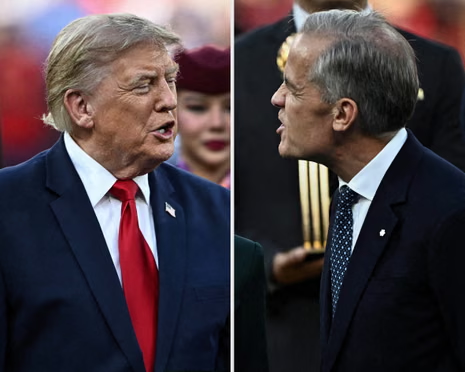
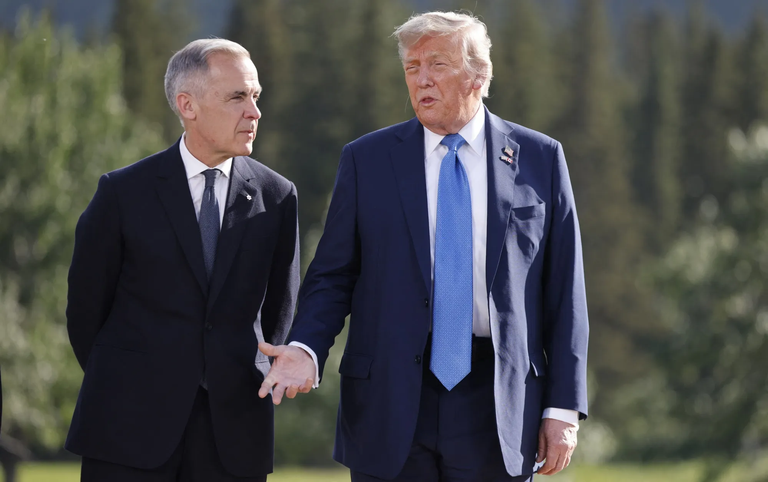
OTTAWA — In a direct challenge to the White House’s version of events, Canadian Prime Minister Mark Carney on Tuesday flatly denied claims that he apologized for or retracted his blistering Davos address during a private phone call with President Donald Trump.

The clash of narratives began late Monday after U.S. Treasury Secretary Scott Bessent told Fox News that he was in the Oval Office when Trump spoke to Carney. According to Bessent, the Canadian leader was “very aggressively walking back some of the unfortunate remarks he made at Davos” during the 30-minute conversation.

Arriving for a cabinet meeting on Parliament Hill Tuesday morning, Carney was asked point-blank if he had recanted.
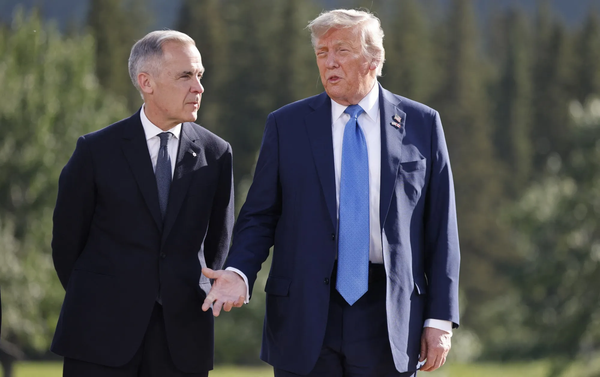
“No,” Carney said, rolling his eyes at the mention of Bessent’s comments. “To be absolutely clear—and I said this to the President—I meant what I said in Davos. Canada was the first country to understand the change in U.S. trade policy that he initiated, and we’re responding to that.”


The Speech That Shook the Alps

The dispute centers on Carney’s keynote at the World Economic Forum last week, where he received a standing ovation for describing the current global state as a “rupture” in the rules-based order. While he did not name the President directly, he warned against “great powers using economic integration as weapons” and famously told mid-sized nations, “If you are not at the table, you are on the menu.”

Trump responded at the time by dismissing the speech as “globalist” and issuing a sharp reminder that “Canada lives because of the United States.”


A Tense Diplomacy of Dueling Accounts

The discrepancy between Ottawa and Washington suggests a deeply fractured diplomatic channel as the two nations prepare for a mandatory review of the USMCA trade pact this summer.

The Two Versions of the Monday Call:

  • The White House Version (via Scott Bessent): Carney was apologetic and “aggressively” backpedaling to avoid the 100% tariff threat Trump leveled over Canada’s recent trade deal with China.
  • The Ottawa Version (via Mark Carney): The call was “very good” and “constructive,” covering Arctic security, Ukraine, and Venezuela. Carney claims he stood his ground, explaining that Canada’s “narrow” China deal is a pragmatic response to U.S. protectionism.

“He was impressed,” Carney told reporters, referring to Trump’s reaction to Canada’s plan to sign 12 new trade deals across four continents in six months. “The President is a strong negotiator, and I think some of these comments and positioning should be viewed in that broader context.”


Mark Carney

The China Factor and Tariff Threats

The backdrop to the “walk-back” controversy is the President’s threat of a 100% tariff on Canadian goods—a move sparked by Carney’s agreement with Beijing to lower levies on Canadian canola in exchange for allowing 49,000 Chinese electric vehicles into the Canadian market.

The Trump administration views the deal as a “backdoor” for Chinese products, while Carney has insisted the arrangement is consistent with North American trade rules and necessary for Canadian “strategic autonomy.”

TopicTrump Administration ViewCarney Administration View
Davos SpeechAn insult to U.S. leadership.A “naming of reality” for middle powers.
China TradeA “Trojan Horse” for Chinese EVs.A capped, narrow deal to protect farmers.
USMCA ReviewA chance to demand concessions.A routine review of a shared partnership.

‘We Must Defend Our Sovereignty’

The defiant tone from Ottawa marks a significant shift in the Canada-U.S. relationship. By publicly contradicting a senior U.S. cabinet official, Carney is signaling that he will not be intimidated by the “maximum pressure” tactics that have become the hallmark of the current administration’s foreign policy.

“Canada doesn’t live because of the United States. Canada thrives because we are Canadian,” Carney told his cabinet Tuesday, echoing his Quebec City speech from earlier in the week.

As the USMCA review approaches, the “he-said, he-said” nature of this phone call underscores a uncomfortable truth for 2026: the world’s longest undefended border is now home to one of its most volatile diplomatic standoffs.

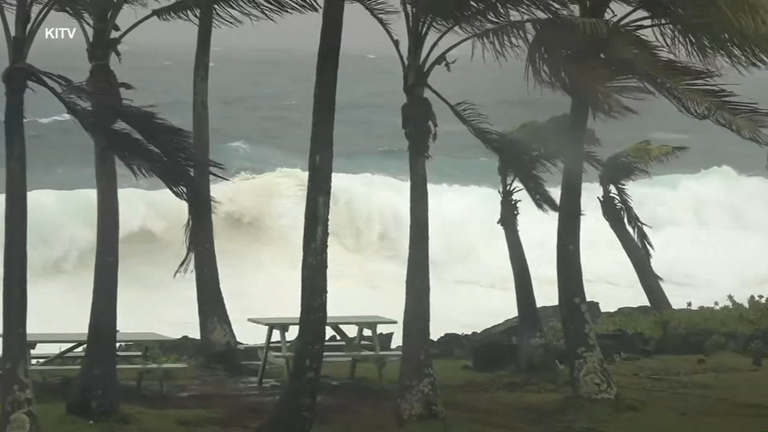
Storm Harry: 1,500 Evacuated as Sicilian Town Teeters on Crumbling 2.5-Mile Cliff

NISCEMI, SICILY — The hilltop town of Niscemi is literally sliding into the sea.

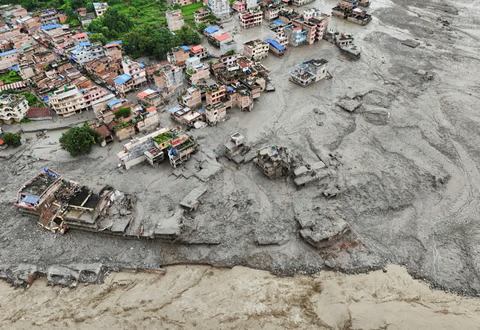
In the catastrophic wake of Storm Harry, a massive four-kilometer (2.5-mile) fissure has torn through the southern Sicilian landscape, creating a shifting chasm that is actively swallowing residential neighborhoods. As of Tuesday, Italian authorities have ordered the urgent evacuation of more than 1,500 residents, as homes, cars, and historic structures hang perilously over a 25-meter (82-foot) precipice.

“The situation is dire—there is no denying it, we are scared,” Niscemi Mayor Massimiliano Conti told reporters, his voice strained as the ground beneath his town continues to groan. “The creaking continues, and the rain isn’t helping. From aerial images, it is shocking to see our Niscemi collapsing.”


A Town Divided by a Chasm

The landslide began Sunday in the Santa Croci and Trappeto districts after a week of relentless rainfall from Cyclone Harry—a storm meteorologists have described as a “once-in-a-century” event. The saturated clay-rich soil finally gave way, creating a vertical “shelf” that continues to widen.

  • The Red Zone: A strict exclusion perimeter has been expanded to 150 meters from the cliff edge. Civil Protection officials warn that any building within 70 meters of the rupture is now considered a total loss.
  • The “Hanging” City: Dramatic drone footage captured on Tuesday showed the front wheels of parked cars dangling over the void, while the interiors of modern apartments are exposed to the elements like open dollhouses.
  • Infrastructure Collapse: Two major provincial roads leading into the town of 25,000 have been severed, threatening to isolate the community entirely.

State of Emergency Declared

The Italian government, led by Prime Minister Giorgia Meloni, declared a one-year state of emergency on Monday for Sicily, Calabria, and Sardinia. An initial €100 million ($108 million) has been unlocked for “urgent interventions,” though local leaders warn the figure is a drop in the ocean.

“This is a dramatic landslide,” said Nello Musumeci, Minister for Civil Protection. “We are deploying specialized teams of geologists to predict the next moves of this mass, but the landslide is active. It hasn’t stopped.”

Estimates for the total damage across Sicily alone have reached a staggering €1.5 billion. Beyond Niscemi, the storm’s 10-meter waves and hurricane-force winds have decimated coastal promenades in Catania and destroyed fishing fleets in the Ionian Sea.


The Human Toll of ‘The Abyss’

While no fatalities or injuries have been reported—thanks to early warning sirens and a rapid “precautionary” evacuation—the psychological toll on the displaced is immense. Hundreds of families are currently sleeping on cots in a local sports arena, while others have crowded into the homes of relatives.

RegionDisplaced PersonsEstimated Damage
Sicily (Niscemi)1,500+€1.5 Billion
Sardinia150+€300 Million+
CalabriaHundredsSignificant

A Fragile Future

Geologists are now racing against the clock. The fear is that the “4km front” could continue to move toward the historic center of Niscemi, which dates back to the 17th century. Experts point to a similar, though smaller, landslide in 1997 as proof that this region is uniquely vulnerable to the climate-driven “super-storms” now frequenting the Mediterranean.

For the people of Niscemi, the immediate future is a waiting game. “Who has a home there may never go back,” warned Fabio Ciciliano, head of the national Civil Protection Department. “The land is no longer theirs; it belongs to the ravine.”

India and EU Clinch Historic Trade Pact to Defy Trump’s Tariff Wall

NEW DELHI — In a resounding rebuke to the “America First” protectionism radiating from Washington, India and the European Union on Tuesday finalized a landmark free trade agreement, bringing a dramatic close to two decades of diplomatic stalemate.

Standing in the shadow of President Donald Trump’s escalating global trade war, Prime Minister Narendra Modi and European Commission President Ursula von der Leyen announced the completion of what they dubbed the “mother of all deals.” The pact creates a staggering free trade zone of two billion people, representing 25% of global GDP and a third of all world trade.

“At a time of turmoil in the global order, this partnership will strengthen stability,” Prime Minister Modi told a packed news conference in Delhi. “Today, India and Europe are making history.”


The ‘Trump Impulse’

While negotiations for the India-EU Free Trade Agreement (FTA) first began in 2007, they had spent the better part of twenty years gathering dust. The sudden acceleration of the talks—reaching a fever pitch over the last six months—is widely viewed as a direct consequence of the “Trumpian shock” to the global system.

The President’s recent moves have fundamentally altered the risk calculus for both New Delhi and Brussels:

  • Targeting India: Trump has slapped 50% tariffs on key Indian exports, partly as punishment for India’s continued purchase of Russian oil.
  • Coercing Europe: The EU is still reeling from the President’s threat to impose 25% tariffs on allies who opposed his administration’s bid to acquire Greenland.
  • The Isolation Effect: U.S. Treasury Secretary Scott Bessent admitted on Tuesday that the U.S. is feeling “isolated” as its traditional partners forge ahead with their own networks.

“The turmoil caused by the Trump administration’s tariff policies has clearly sharpened minds,” said Jörn Fleck, senior director of the Atlantic Council’s Europe Center. “Antagonism from the United States provided the immediate impetus to get this done.”


A Tale of Two Giants

The deal is far more than a defensive crouch; it is a massive structural realignment of the world’s second and fourth-largest economies. By slashing trade barriers that have historically been among the highest in the world, the pact promises a radical exchange of goods and expertise.

Key Breakthroughs of the Deal:

  • Automotive: India will slash its prohibitive 110% import duties on European cars (including Volkswagen, Renault, and Mercedes-Benz) down to a flat 10%.
  • Luxury & Agri-food: Prohibitive tariffs on European wine, chocolates, and olive oil will be eliminated or drastically reduced.
  • Labor Mobility: In a major win for New Delhi, the EU will grant “privileged access” to highly skilled Indian professionals, facilitating a surge of talent into Europe’s IT and healthcare sectors.
  • Strategic Diversification: The EU aims to double its goods exports to India by 2032, reducing its 17.3% trade dependency on the United States.

Strategic Shielding

Beyond the balance sheets, the agreement includes a framework for deeper defense and security cooperation. With the U.S. increasingly weaponizing trade to achieve territorial and geopolitical aims—from Greenland to the South China Sea—India and the EU are attempting to “Trump-proof” their future.

The deal also serves as a hedge against China. By creating a robust alternative supply chain, Brussels and Delhi hope to reduce their reliance on Chinese manufacturing while simultaneously sidestepping the “100% tariff” threats Trump has leveled at neighbors like Canada for engaging with Beijing.

FactorPrevious StatusNew FTA Status
Market SizeFragmented2 Billion Consumers
Average TariffsUp to 110% (India)Near Zero on 97% of goods
U.S. LeverageHigh (Primary Partner)Diminishing (Diversified)
Labor FlowRestrictiveEase of Mobility for Professionals

The Outside Looking In

As the formal signing ceremony concludes in New Delhi, the geopolitical landscape has shifted. The United States, once the architect of global trade, now finds itself on the outside of the world’s most significant new economic corridor.
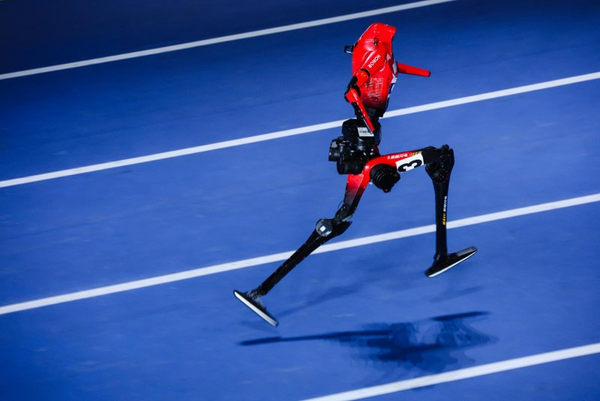
While von der Leyen hailed the deal as a “signal to the world that rules-based cooperation still delivers,” the subtext was clear: the world is no longer waiting for Washington. In the “Age of Trump,” the “mother of all deals” has proven that the most effective response to a tariff wall is a bridge built elsewhere.

Australian Open 2026: Coco Gauff Calls for Player Privacy After ‘Private’ Racket Smash Goes Viral

MELBOURNE — In the high-pressure corridors of professional tennis, even the exits are no longer private.

Following a bruising 6-1, 6-2 quarterfinal exit at the 2026 Australian Open on Tuesday, world No. 3 Coco Gauff ignited a debate over the “fly-on-the-wall” nature of modern sports broadcasting. After an uncharacteristically error-strewn performance against Ukraine’s Elina Svitolina, the 21-year-old American was captured on a “behind-the-scenes” camera repeatedly smashing her racquet against a concrete ramp—an outburst she intentionally tried to hide from the public eye.

“I tried to go somewhere where there were no cameras,” a composed Gauff told reporters during her post-match press conference. “I feel like certain moments… they don’t need to broadcast. I don’t necessarily like breaking racquets, and I don’t want to do it on court in front of kids because I don’t think that’s a good representation.”


The ‘Tunnels of Melbourne’ Incident

The footage, which was broadcast within minutes of the match concluding and quickly went viral on social media, showed Gauff stepping behind a low barrier in a tunnel leading away from Rod Laver Arena. There, she pounded her racquet into the floor seven times—once for every time she was broken during the 59-minute match.

Gauff argued that the omnipresence of cameras in gyms, hallways, and recovery areas is stripping players of their emotional autonomy.

“Maybe some conversations can be had,” Gauff added. “I feel like at this tournament, the only private place we have is the locker room. I know I’m emotional, and I just took the minute to let it out so I wouldn’t be snappy with my team. They don’t deserve that.”

A Pattern of Intrusive Coverage

Gauff cited a similar incident involving world No. 1 Aryna Sabalenka, whose locker-room-area breakdown after the 2023 US Open final was also caught by cameras and shared globally. The American star suggested that while fans crave “access,” there is a line between sports journalism and a violation of a player’s “reset” space.

Broadcasting Boundaries: The Disputed Zones

  • The Court: Public domain; emotional outbursts are part of the game.
  • The Walkway: Grey area; fly-on-the-wall cameras are now standard for “immersion.”
  • The Gym/Warm-up: Controversial; players argue this is their “office” and should be off-limits for raw footage.
  • The Locker Room: The last remaining sanctuary (for now).

The Match: A Bad Day at the Office

The emotional release followed what commentators described as Gauff’s worst performance since her 2023 US Open title run. Facing the 12th-seeded Svitolina, Gauff’s game unraveled in the Melbourne heat:

StatisticCoco GauffElina Svitolina
Winners312
Unforced Errors269
2nd Serve Points Won2/11 (18%)8/12 (67%)
Double Faults51

“I just felt like nothing for me was working,” Gauff admitted. “The backhand wasn’t firing, the returns weren’t there. I credit it to her; she forced me to play like that.”

The Industry Response

Tournament organizers have yet to formally respond to Gauff’s request for “conversations” regarding camera placement. However, the incident has highlighted the tension between players and broadcasters who are increasingly incentivized to capture “raw” moments for social media engagement.

As Svitolina moves on to a blockbuster semifinal against Sabalenka, Gauff departs Melbourne with a reminder that in 2026, the “Art of the Deal” isn’t just about winning matches—it’s about negotiating where the cameras stop rolling.

New Research Links Menopause to ‘Alzheimer’s-Like’ Brain Shrinkage

CAMBRIDGE, UK — A landmark study has revealed that the transition into menopause triggers a significant loss of gray matter in brain regions identical to those ravaged by early-stage Alzheimer’s disease, potentially solving the long-standing mystery of why women are nearly twice as likely to develop dementia as men.

The research, led by the University of Cambridge and published Tuesday in Psychological Medicine, analyzed data from more than 124,000 women. It found that the precipitous drop in estrogen during menopause acts as a “neurological shock,” accelerating the aging process in the hippocampus and entorhinal cortex—the brain’s primary centers for memory and navigation.

“The brain regions where we saw these differences are the very ones affected by Alzheimer’s,” said Professor Barbara Sahakian, the study’s senior author. “Menopause may be creating a window of vulnerability that makes women much more susceptible to neurodegeneration further down the line.”


A Structural Shift in the ‘Gateway’ to Memory

Using high-resolution MRI scans from over 11,000 participants, researchers identified a “striking” reduction in gray matter volume among post-menopausal women. Gray matter contains the nerve cell bodies essential for processing information and managing emotions.

The study highlighted three specific “at-risk” zones:

  • The Hippocampus: Critical for forming and storing new memories.
  • The Entorhinal Cortex: Often called the “gateway” to the brain, it is the first area typically damaged in Alzheimer’s.
  • The Anterior Cingulate Cortex: Responsible for emotional regulation and decision-making.

While gray matter loss is a natural part of aging for both sexes, the researchers found that menopause accelerates this decline in women. Interestingly, while the structural changes were evident, memory performance remained stable in the short term, suggesting the brain may be “compensating” for the loss before clinical symptoms appear years later.


The HRT Debate: A Speed Bump, Not a Cure

The study also waded into the contentious debate over Hormone Replacement Therapy (HRT). Researchers found that while HRT does not appear to prevent the overall loss of brain volume, it does seem to “put the brakes” on cognitive slowing.

Women on HRT demonstrated significantly faster reaction times than those who were not, suggesting that estrogen may preserve the “processing speed” of the brain even as the structure changes.

“Reaction times naturally slow as we age,” explained Dr. Katharina Zühlsdorff, a co-author of the study. “Menopause accelerates this process, but HRT appears to slow the aging process slightly, keeping the brain’s ‘quiz-speed’ intact.”


Beyond Biology: The Mental Health Toll

The Cambridge study further confirmed that the transition is not merely a biological shift but a mental health crisis. Post-menopausal women were found to be significantly more likely to suffer from:

  1. Insomnia and Sleep Fragmentation: Reported across all post-menopausal groups.
  2. Anxiety and Depression: Leading to a higher rate of antidepressant prescriptions compared to pre-menopausal women.
  3. Chronic Fatigue: Paradoxically, women on HRT reported feeling the most tired, despite sleeping the same amount as their peers.
GroupGray Matter VolumeReaction SpeedMental Health Risk
Pre-MenopausalHigh (Baseline)FastLower
Post-Menopause (No HRT)Significantly LowerSlowerHigher
Post-Menopause (With HRT)Significantly LowerFast (Preserved)Higher

The ‘Critical Window’

The findings support a growing medical consensus known as the “Critical Window Hypothesis.” This suggests that the timing of estrogen loss—and the timing of medical intervention—is the key to long-term brain health.

“We can no longer view menopause as just a reproductive end-point,” said Michelle Dyson, CEO of the Alzheimer’s Society. “This study proves it is a major neurological event. We need to be screening for brain health during this period with the same urgency we use for bone density or heart health.”

As 2026 unfolds, the medical community is calling for a “precision medicine” approach to the menopause transition, urging women to focus on lifestyle factors—such as aerobic exercise and a neuroprotective diet—to build “cognitive reserve” while the brain is at its most vulnerable.

Alex Honnold Rewrites Human Limits with Historic Free Solo of Taipei 101

TAIPEI, TAIWAN — In a display of physical prowess and mental fortification that left a global audience breathless, American rock climber Alex Honnold successfully scaled the Taipei 101 skyscraper on Sunday, becoming the first person to summit the 1,667-foot (508-meter) tower without ropes or safety equipment.

The 40-year-old athlete, world-renowned for his ropeless ascent of Yosemite’s El Capitan, completed the “urban free solo” in one hour, 31 minutes, and 35 seconds. The feat, broadcast live to millions on Netflix under the title Skyscraper Live, was originally scheduled for Saturday but was delayed 24 hours due to inclement weather—a rain-slicked surface being the one variable even Honnold cannot negotiate.

“It was very windy up there,” a characteristically calm Honnold said after hauling himself over the final steel ledge of the spire. “I was just telling myself, ‘Don’t fall off the spire.’ But what an incredible position—what a beautiful way to see Taipei.”


The Anatomy of the Ascent

Climbing a skyscraper presents a set of challenges far removed from the granite cracks of the Sierra Nevada. Honnold described the building’s geometry as repetitive, requiring a “metronomic” focus to avoid a fatal lapse in concentration.

  • The Bamboo Boxes: The most grueling segment involved the 64 floors of the central tower, designed to resemble segments of a bamboo stalk. These eight sections feature steep, overhanging angles of 10 to 15 degrees, requiring immense upper-body strength.
  • The L-Ledge Technique: Honnold moved primarily along one corner of the building, utilizing small, L-shaped protrusions as finger-holds and footholds.
  • The Spire Finish: The final stage saw Honnold contending with high-altitude gusts as the building narrowed into a needle-like peak. At several points, he was seen “campusing”—climbing with only his hands while his feet dangled over the abyss.

Image source: Netflix

A Global Spectacle on a 10-Second Delay

The live-streamed nature of the climb drew both awe and ethical debate. To protect viewers from a potential tragedy, Netflix operated on a 10-second delay, though the tension was palpable for the commentators—which included WWE’s Seth Rollins and climbing legend Emily Harrington.

Throughout the climb, Honnold remained mic’d up, offering surreal commentary to his wife, Sanni McCandless, and the millions watching. “The view’s amazing,” he remarked while passing the 60th floor. “Look at Taipei, it’s so cool.”

MilestoneTime (Local)Event
09:11 AMStartHonnold begins ascent at the corner base.
09:45 AMHalfwayReaches the midpoint of the “Bamboo Box” section.
10:15 AMThe SpireBegins the final, wind-whipped vertical spire.
10:43 AMSummitReaches the 101st floor; reunites with Sanni.

The Urban Frontier

While French “Spider-Man” Alain Robert scaled Taipei 101 in 2004, he utilized ropes and took four hours to reach the top. Honnold’s barehanded, ropeless approach marks the pinnacle of “urban soloing.”

“I’m not getting paid to climb the building; I’m getting paid for the spectacle,” Honnold told reporters, addressing the rumored mid-six-figure fee he received for the broadcast. He insisted that if the cameras hadn’t been there, he would have done it anyway for the “pure joy” of the movement.

As the sun set over Taipei, the iconic green tower stood as a monument to a man who has spent his life widening his “comfort zone” until it encompasses the sky itself. For Honnold, it was just another day at the office—albeit one with a significantly higher window.

New Minneapolis Shooting Footage Obliterates Federal Narrative of ‘Armed Assault’

A series of graphic bystander and surveillance videos has emerged, providing a harrowing, frame-by-frame look at the moments leading up to the fatal shooting of 37-year-old Alex Jeffrey Pretti by federal agents on Saturday morning.

The footage, which has since gone viral and sparked a fresh wave of unrest across the Twin Cities, appears to directly contradict the initial “self-defense” narrative provided by the Department of Homeland Security (DHS). While DHS Secretary Kristi Noem maintained that Pretti “approached officers with a handgun” and “reacted violently,” the visual evidence tells a more complex story of an ICU nurse caught in a split-second escalation.

“What we see on these tapes is not an ‘armed confrontation,’” said Keith Ellison, Minnesota’s Attorney General. “We see a citizen attempting to de-escalate a situation, only to be met with overwhelming and fatal force.”


The Anatomy of an Escalation

The most comprehensive video, obtained by The Minnesota Star Tribune, begins at 9:05 a.m. in the heart of Minneapolis’s “Eat Street.” The temperature is a biting -10°F.

  1. The Initial Recording: Pretti is seen filming federal agents from a sidewalk as they conduct a “targeted operation.” One hand is holding his cell phone horizontally; his other hand is empty and visible.
  2. The Intervention: An agent is seen shoving a bystander in a brown jacket. Pretti steps forward, appearing to lead the person away from the agent toward a snowbank to defuse the tension.
  3. The Takedown: As Pretti attempts to help, an officer immediately sprays him in the face with a chemical irritant. As he stumbles back, blinded, at least six agents wrestle him to the ground.
  4. The Fatal Volley: While Pretti is pinned by multiple bodies, a single shot rings out, followed by a rapid volley of nine more. Crucially, a third angle appears to show an agent pulling a handgun away from the scrum before the shots are fired, suggesting Pretti may have been disarmed prior to being killed.

A City in the Crosshairs

The location of the shooting—less than two miles from where George Floyd was murdered—has amplified the trauma of a city already reeling from the January 7 killing of Renée Good.

While DHS spokesperson Tricia McLaughlin described the agents’ actions as “defensive shots” fired in fear for their lives, local officials are calling it “organized brutality.” Minneapolis Police Chief Brian O’Hara confirmed that Pretti, a respected nurse at the Minneapolis VA, was a “lawful gun owner” with a permit to carry and no criminal record beyond parking tickets.

“He was the type of person you really want to have as a neighbor,” said one resident whose father Pretti cared for in the ICU. “He was as compassionate as a person could be.”


The Investigation Standoff

The release of the video has triggered a jurisdictional war. Despite the Minnesota Bureau of Criminal Apprehension (BCA) obtaining a signed search warrant to process the scene, federal agents reportedly blocked state investigators from entering the perimeter for several hours on Saturday.

The War of Words:

  • The Federal Claim: Pretti was an “armed suspect” who “violently resisted” and intended to “massacre law enforcement.”
  • The State Rebuttal: Governor Tim Walz called the federal narrative “an abomination,” urging the administration to pull agents from the city.
  • The Legal Fight: Attorney General Ellison announced he will argue in court on Monday to end Operation Metro Surge, citing a pattern of “unlawful seizures” and racial profiling.

A State Under Siege

In Washington, the video has emboldened calls for a federal pullout. While President Trump has accused Minnesota leaders of “inciting insurrection” by resisting federal law, the visual evidence has forced a national conversation on the tactics used in the current immigration crackdown.

As a vehicle exclusionary zone is established around Nicollet Avenue and the National Guard remains on standby, the video of Alex Pretti’s final moments has become the rallying cry for a city that feels increasingly like an occupied territory.

Ukraine Peace Talks End with ‘Constructive’ Vows While Missiles Shatter the Table

ABU DHABI — A high-stakes, two-day diplomatic marathon in the United Arab Emirates concluded on Saturday with a jarring contradiction: a U.S.-led declaration of “constructive” progress toward ending the war, even as the heaviest Russian bombardment in weeks plunged Ukraine into a subzero blackout.

The trilateral talks—bringing together top negotiators from Washington, Kyiv, and Moscow—drew to a close without a definitive breakthrough. However, U.S. envoy Steve Witkoff announced that the parties had agreed to resume negotiations in the Emirati capital as early as February 1. While the diplomatic pulse remains steady, the reality on the ground suggests a landscape far from peace.

“His missiles hit not only our people, but also the negotiation table,” wrote Ukrainian Foreign Minister Andrii Sybiha, accusing Vladimir Putin of ordering a “cynical” massive strike during the very hours that envoys were debating ceasefire lines.


The ‘Anchorage Formula’ and the Donbas Wall

The primary hurdle remains the “territorial issue,” specifically a 28-point proposal dubbed the Anchorage Formula. According to sources close to the Kremlin, Moscow insists on the following non-negotiables for a ceasefire:

  • The Donbas Cession: Full Ukrainian withdrawal from all of Donetsk and Luhansk oblasts.
  • NATO Renunciation: A formal, binding pledge that Kyiv will never seek membership in the Atlantic alliance.
  • Frontline Freeze: A cessation of hostilities along current combat lines in the south and east.

While President Volodymyr Zelenskyy briefed his team on the “constructive” nature of the talks, he cautioned that no deal can exist while Russia attempts to “freeze Ukraine into submission.” The Ukrainian side has proposed a sequence where a ceasefire precedes any referendum on territory—a point of friction that remains the “remaining 10 percent” of a deal that some observers say is nearly complete.


War Rages Beneath the Summit

As negotiators sipped coffee in the luxury suites of Abu Dhabi, the war’s brutal winter phase reached a new peak of intensity.

  • Kyiv & Kharkiv Under Fire: A massive wave of Russian drone and missile strikes hit the capital and the northeast, killing at least one person and wounding dozens. Fires were reported on both sides of the Dnipro River.
  • The Energy Crisis: An estimated 1.2 million Ukrainians were left without electricity, heat, or water in subzero temperatures after Russian strikes targeted “long-range drone sites and energy facilities.”
  • Frontline Gains: The Russian Defense Ministry claimed its forces completed the takeover of the village of Starytsya in the Kharkiv region, underscoring their intent to secure “military facts” ahead of the next round of talks.

The Road to February 1

Despite the carnage, U.S. officials expressed a surprising degree of optimism, suggesting that these technical meetings are the necessary preamble to a direct “tri-summit” between President Donald Trump, Putin, and Zelenskyy.

Key PlayerStatusPublic Stance
Steve Witkoff (USA)Coordinating“Dedicated to bringing peace to this war.”
Igor Kostyukov (Russia)Military Intelligence LeadInsists on Ukrainian withdrawal from Donbas.
Rustem Umerov (Ukraine)Defense MinisterFocusing on “logic of the negotiation process.”
Mark Rutte (NATO)StakeholderReaffirming support for Ukraine’s sovereignty.

A Fragile Hope

The duality of the weekend—diplomatic smiles in the desert and shattered glass in Kyiv—reflects a war entering its most dangerous “transactional” phase. For the millions of Ukrainians currently huddling in parking lots and shelters to avoid drone strikes, the “constructive” language of Abu Dhabi remains a world away.

“They’ll just say everything is fine, and then there will be more rockets,” said Anastasia, a Kyiv resident who spent Saturday night in an underground garage.

As the delegations return home to brief their leaders, the world watches the February 1st deadline. The question is no longer whether the parties can talk, but whether the “Anchorage Formula” can survive the heat of a battlefield that refuses to cool.

ICU Nurse Shot Dead by Federal Agents in South Minneapolis

MINNEAPOLIS — A quiet Saturday morning in south Minneapolis was shattered at 9:05 a.m. when federal agents fatally shot Alex Jeffrey Pretti, a 37-year-old ICU nurse and local resident, marking the third time in seventeen days that federal personnel have discharged weapons in the city.

The shooting occurred at the intersection of 26th Street and Nicollet Avenue—the heart of the city’s “Eat Street”—amidst an ongoing, high-intensity immigration crackdown. As temperatures plunged to -10°F, the intersection transformed from a commercial corridor into a crime scene that local officials say federal agents are now “occupying” by force.

“Minnesota has had it,” Governor Tim Walz said in a searing afternoon press conference. “This is an absolute abomination. We are watching a campaign of organized brutality against the people of our state.”


Disputed Accounts and Viral Evidence

The Department of Homeland Security (DHS) was quick to defend the lethal force. In a statement, DHS spokesperson Tricia McLaughlin alleged that Pretti “approached U.S. Border Patrol officers with a 9mm semi-automatic handgun” during a targeted operation. She claimed agents fired “defensive shots” after an “armed suspect reacted violently” during a disarming attempt.

However, bystander footage and a preliminary video analysis by The New York Times and CNN paint a far more chaotic picture:

  • The Footage: Videos show Pretti filming agents with his phone and directing traffic away from the scene.
  • The Escalation: Pretti appears to step in to help a legal observer who was shoved by an agent. He is then pepper-sprayed and tackled by at least six agents.
  • The Disarming: Close-up analysis of one video angle appears to show an agent pulling a firearm from the scuffle and running away with it before the fatal volley of roughly ten shots is fired.

Minneapolis Police Chief Brian O’Hara confirmed that Pretti was a “lawful gun owner with a permit to carry” and had no criminal record beyond traffic tickets.


A City Under Federal ‘Occupation’

The death of Pretti, an American citizen and veteran’s nurse at the Minneapolis VA, has brought the city to a boiling point. It follows the January 7 killing of Renée Nicole Good, another 37-year-old citizen shot by ICE agents.

FigureRoleStance / Quote
Alex PrettiVictimICU nurse, avid outdoorsman, and peaceful protester.
Kristi NoemDHS SecretaryClaims Pretti intended to “massacre law enforcement.”
Tim WalzMN GovernorCalled on Trump to “pull the 3,000 violent agents out of Minnesota.”
Brian O’HaraMPD ChiefDemanding federal agencies act with “discipline, humanity, and integrity.”

The Jurisdictional Standoff

In an unprecedented move, the Minnesota Bureau of Criminal Apprehension (BCA) reported that federal agents blocked state investigators from the scene for hours. Even after the BCA returned with a search warrant signed by a judge, federal representatives reportedly refused them access to the evidence.

Governor Walz has since activated the Minnesota National Guard, not to assist federal operations, but to stand as a buffer and “secure justice” for state investigators. Meanwhile, protests have erupted in cities from Boston to New York, with demonstrators braving subzero winds to chant “ICE out now.”

As the sun sets over a boarded-up Nicollet Avenue, Minneapolis remains a city caught between its local leaders and a federal administration that appears ready to bypass state law entirely.

Trump Threatens ‘Total Tariff’ on Canada Over China Deal

The escalating feud between North America’s two largest economies turned explosive on Saturday, as President Donald Trump threatened to impose a sweeping 100 percent tariff on all Canadian goods if Ottawa proceeds with a newly announced trade pact with Beijing.

In a blistering series of social media posts that shattered the fragile truce between the two neighbors, the President explicitly accused Canadian Prime Minister Mark Carney of economic betrayal, warning that Canada was positioning itself as a “Trojan Horse” for Chinese industry to infiltrate the American market.

“If Governor Carney thinks he is going to make Canada a ‘Drop Off Port’ for China to send goods and products into the United States, he is sorely mistaken,” Trump wrote on Truth Social. “China will eat Canada alive, completely devour it… If Canada makes a deal with China, it will immediately be hit with a 100% Tariff against all Canadian goods.”


The Trigger: EVs for Canola

The President’s ultimatum is a direct response to the “Beijing Break” agreement announced last week during Carney’s state visit to China. Under the terms of the deal—which Carney framed as a necessary diversification of Canadian trade—Beijing agreed to slash tariffs on Canadian canola and seafood in exchange for Canada allowing an annual quota of 49,000 Chinese electric vehicles to enter the country at a standard 6.1% tariff rate, bypassing the punitive barriers erected by the U.S.

To the White House, this quota is a breach of the continental security perimeter. Administration officials view the influx of Chinese EVs, potentially laden with subsidized technology, as a direct threat to the U.S. auto industry, which is deeply integrated with Canadian manufacturing.


‘Governor Carney’ and the 51st State

The President’s rhetoric on Saturday marked a personal escalation against the Canadian Prime Minister. By repeatedly referring to the head of a G7 nation as “Governor Carney,” Trump revived a provocation he has used to suggest Canada is effectively a dependency of the United States—or, as he has hinted in previous rallies, a future “51st state.”

“Canada lives because of the United States,” Trump wrote, referencing a tense exchange between the two leaders at the World Economic Forum in Davos earlier this week. “Remember that, Mark, the next time you make your statements.”

Carney, who used his Davos address to warn of a “rupture” in the global order caused by “great power coercion,” shot back late Saturday from Ottawa.

“Canada doesn’t live because of the United States. Canada thrives because we are Canadian,” Carney told reporters. “We are a sovereign nation that will trade with the world on our own terms, not on instructions from a foreign capital.”


Trump inauguration
Image source: rawpixel.com

Economic Mutually Assured Destruction

Trade experts warn that a 100 percent tariff on Canadian goods would be an “economic nuclear strike” with devastating fallout on both sides of the border. Canada is the top export destination for 36 U.S. states, and the two nations trade roughly $2.7 billion in goods every single day.

“You cannot wall off Canada without shutting down Detroit,” said Flavio Volpe, president of the Automotive Parts Manufacturers’ Association. “Parts cross this border seven times before a car is finished. A 100% tariff isn’t a penalty; it’s a suicide pact for the American auto industry.”


A Relationship on the Brink

The tariff threat is the latest shock in a month that has seen U.S.-Canada relations deteriorate at record speed.

  • Jan 17: Trump threatens tariffs on European allies over Greenland, a move Carney publicly criticized.
  • Jan 20: Carney announces the EV-for-agriculture deal with Xi Jinping.
  • Jan 21: Trump revokes Carney’s invitation to join the global “Board of Peace.”
  • Jan 24: The 100% tariff threat is issued.

As of Saturday night, the White House has given no timeline for when the tariffs might be implemented, leaving businesses from automakers to lumber mills in a state of paralysis. For Mark Carney, the gamble of pivoting to China has yielded an immediate and ferocious response from the south, forcing Canada to decide whether to blink or brace for the biggest trade war in its history.

The Davos Detente: Trump Scraps Tariff Threat, Hails ‘Framework’ for Greenland Security Deal

DAVOS, SWITZERLAND — In a stunning reversal that sent global markets soaring, President Donald Trump announced on Wednesday that he is dropping his threat of massive tariffs against European allies, claiming to have brokered a “framework of a future deal” for the acquisition and security of Greenland.

The breakthrough occurred following a high-stakes, one-on-one meeting at the World Economic Forum between the President and NATO Secretary General Mark Rutte. The agreement effectively pauses what many feared was an imminent transatlantic trade war, which would have seen 10-to-25 percent levies hit eight NATO nations on February 1.

“We have formed the framework of a future deal with respect to Greenland and, in fact, the entire Arctic Region,” Trump wrote in a Truth Social post from the Swiss Alps. “This solution, if consummated, will be a great one for the United States of America and all NATO nations. Based upon this understanding, I will not be imposing the tariffs.”


The ‘Golden Dome’ and the Arctic Pivot

While details of the framework remain classified, the President revealed that the deal centers on his proposed “Golden Dome” missile defense system. Trump argued that U.S. “right, title, and ownership” of the island is the only way to ensure the shield protects the entire Western Hemisphere from Russian and Chinese hypersonic threats.+1

In a wide-ranging speech in Davos earlier that day, the President for the first time explicitly ruled out the use of military force to seize the island, despite previously refusing to take the option off the table.

“We probably won’t get anything unless I decide to use excessive strength and force, where we would be, frankly, unstoppable,” Trump told the world’s elite. “But I won’t do that. I don’t have to use force. I don’t want to use force. All the United States is asking for is a place called Greenland.”


A Vague Victory?

Despite the President’s celebratory tone, the “framework” appears to be more of a diplomatic truce than a signed deed. NATO Secretary General Mark Rutte, speaking shortly after the announcement, remained tight-lipped, emphasizing that the focus was on “collective security” rather than a transfer of territory.

The Current State of the ‘Deal’:

  • The U.S. Claim: Trump insists the deal “gets us everything we wanted” and will remain in force “forever.”
  • The NATO Stance: Allies are framing the talks as a way to “address American security concerns” in the Arctic while ostensibly respecting Danish sovereignty.
  • The Danish Response: Danish Foreign Minister Lars Løkke Rasmussen welcomed the end of the “trade war” but reiterated that Greenland is not for sale, suggesting the “deal” may actually be an expanded long-term basing or security agreement.

Trump Davos 2026
Image source: AP Photo/Evan Vucci

Market Relief and Political Fallout

Wall Street responded with its best day in months, as the Dow and Nasdaq rebounded from the “Greenland Slump” triggered by last weekend’s tariff threats. Investors breathed a sigh of relief at the prospect of stability, though political analysts warn the “framework” could be a temporary ceasefire.+1

In the U.S., Republican allies praised the President’s “art of the deal” tactics, while Democrats in Congress characterized the announcement as a “face-saving retreat” from a disastrous trade policy. Critics pointed out that during his Davos address, the President mistakenly referred to the island as “Iceland” multiple times, adding a layer of confusion to the high-stakes diplomacy.


The Road Ahead

The President has tasked Vice President JD Vance, Secretary of State Marco Rubio, and special envoy Steve Witkoff with leading the next phase of negotiations. The group is expected to meet with Danish and Greenlandic officials in the coming weeks to flesh out the “mineral rights” and “security protocols” that Trump claims are the foundation of the agreement.

As the global elite depart the snowy peaks of Davos, the immediate threat of a fractured NATO has been averted. However, with the President still insisting that “Greenland is our territory,” the battle for the Arctic has merely moved from the tariff boards to the negotiating table.

Supreme Court Skeptical of Trump’s Push to Fire Fed Governor Lisa Cook

In a high-stakes showdown that could redefine the boundaries of executive power, the Supreme Court appeared deeply skeptical Wednesday of President Donald Trump’s attempt to fire Federal Reserve Governor Lisa Cook.

During nearly two hours of oral arguments, a broad coalition of justices—including several of the court’s most conservative members—expressed alarm over the administration’s claim that a president has the “unreviewable” authority to remove central bank officials. The case, Trump v. Cook, is being watched as an existential test for the Federal Reserve’s century-old shield against political interference.+1

“Your position… would weaken, if not shatter, the independence of the Federal Reserve,” Justice Brett Kavanaugh told Solicitor General D. John Sauer. Kavanaugh, a Trump appointee, warned that allowing a president to fire a governor over social media without a formal process would incentivize a cycle of “search and destroy” tactics every time the White House changes parties.


The Mortgage Allegations: Fraud or Pretext?

The administration’s case for firing Cook rests on allegations that she committed mortgage fraud in 2021—before joining the Fed—by claiming two different properties in Michigan and Georgia as her “primary residence” within a two-week span.

Trump announced the firing on Truth Social last August, claiming “sufficient cause” due to “deceitful and potentially criminal conduct.” However, Cook has denied any wrongdoing, and her legal team argued the discrepancies were “inadvertent mistakes” on complex paperwork.+1

Chief Justice John Roberts seemed to downplay the severity of the alleged misconduct, questioning how significant such errors are in the “stack of papers” required for real estate transactions. Justice Sonia Sotomayor was even more blunt, calling the “firing-by-social-media” irregular and noting it provided Cook zero opportunity to be heard.


The Fed Under Fire

The courtroom was a tableau of the broader war between the White House and the central bank. Sitting in the front row was Fed Chair Jerome Powell, who himself is currently the target of a Department of Justice investigation over headquarters renovations—a probe he has dismissed as political retaliation for the Fed’s refusal to slash interest rates.

The Legal Stakes:

  • “For Cause” Removal: Under the Federal Reserve Act, governors can only be removed “for cause.” The administration argues the President alone determines what “cause” means.+1
  • Due Process: Cook’s lawyer, Paul Clement, argued that she was entitled to a hearing and notice before being ousted.
  • Market Stability: Several justices raised concerns that a ruling in Trump’s favor could destabilize global markets by making the Fed a “subservient” wing of the executive branch.

“No judicial review, no process, nothing. You’re done,” Kavanaugh remarked, summarizing the government’s stance. “What are we doing when we have a system that leads to that?”


A Split from Previous Rulings?

The skepticism displayed Wednesday marks a potential departure from the Court’s recent trend of expanding presidential removal power over other “independent” agencies, such as the National Labor Relations Board.

The justices appeared to view the Federal Reserve as a “uniquely structured” entity whose insulation from politics is critical to the U.S. economy. Even Justice Amy Coney Barrett expressed caution, noting that while she is a judge and not an economist, the “risk” of destabilizing the Fed counselled against a hasty ruling in favor of the President.

The Path Ahead

If the Court rules in Cook’s favor, it would be a major blow to the administration’s “Maximum Pressure” campaign against the Fed. A decision is expected by early summer, but the justices hinted they might issue an interim order even sooner to keep Cook in her seat while the case returns to lower courts for further fact-finding.

For now, Lisa Cook remains on the board, participating in rate-setting meetings and casting votes—a living symbol of the institutional wall that Trump is determined to tear down.

16-Foot Drifts Bury Russia’s Far East in Heaviest Snowfall Since the 1970s

PETROPAVLOVSK-KAMCHATSKY — The Russian Far East is currently entombed in a “once-in-a-generation” winter emergency, as a relentless series of Pacific cyclones has buried entire neighborhoods under snowdrifts reaching as high as 5 meters (16.4 feet).

The Kamchatka Peninsula, already accustomed to brutal winters, has seen its infrastructure collapse under the sheer weight of the accumulation. In the regional capital of Petropavlovsk-Kamchatsky, snow cover has reached a historic 170 centimeters (5.6 feet) on level ground, with wind-whipped drifts swallowing cars, streetlights, and the first two floors of apartment buildings. Meteorologists report that this is the heaviest snowfall the region has witnessed in over 50 years, with some areas receiving 150% of their typical January precipitation in just the first two weeks of the year.


A City in a Tunnel

Daily life in the port city has been replaced by a struggle for survival and mobility. With traditional buses unable to navigate the “snow canyons” that were once streets, the government has deployed National Guard police vans and high-clearance military “shift-buses” to ferry essential workers.

The human impact has been surreal and, at times, tragic:

  • Window Exits: Residents in several districts have been filmed leaping from second- and third-story windows into massive snowbanks after their front doors were completely sealed by “concrete-like” drifts.
  • Hand-Dug Mazes: In place of sidewalks, a network of narrow, hand-carved tunnels now connects apartment entrances to the few cleared main arteries.
  • The “Lost” Fleet: Thousands of cars have been “parked” in snowdrifts for weeks, their locations marked only by the occasional antenna poking through the white expanse.

State of Emergency and Fatalities

Governor Vladimir Solodov declared a municipal state of emergency after the crisis turned lethal. At least two residents—both elderly men—were killed when massive sheets of snow and ice dislodged from rooftops, burying them instantly.

The Emergency Situations Ministry has launched a series of “rescue-by-tunnel” operations, where crews use specialized equipment to dig through drifts to reach elderly residents trapped inside their homes without food or medicine.

“For the modern period of observation, these conditions are exceptionally rare,” said Vera Polyakova, head of Kamchatka’s Hydrometeorology Center. “We haven’t seen anything comparable since the early 1970s.”


The ‘Arctic Pulse’ Connection

The disaster is part of a broader “winter blast” sweeping across Asia. Scientists attribute the extreme accumulation to a weakened Arctic polar vortex, which allowed waves of frigid air to collide with warm, moisture-heavy Pacific cyclones over the Sea of Okhotsk.

While the storms began to recede on January 19, the recovery is expected to take weeks. Prices for private snow removal have surged to over 80,000 rubles ($900), and local stores continue to report “manual monitoring” of bread and milk supplies as delivery trucks struggle to reach isolated neighborhoods.

For now, the people of Kamchatka remain in a state of “strategic hibernation,” waiting for the heavy machinery—and the spring—to excavate them from the 2026 Snow Apocalypse.

68,000-Year-Old Hand Stencil Rewrites the History of Human Imagination

MUNA ISLAND, INDONESIA — Deep within the limestone labyrinth of Liang Metanduno cave, a faint, reddish stain on a rock wall has just shattered our understanding of when and where the human “artistic spark” first ignited.

In a study published Wednesday in the journal Nature, a team of Indonesian and Australian archaeologists revealed that a stencilled outline of a human hand—deliberately modified to resemble a sharp, animal-like claw—is at least 67,800 years old. The discovery makes it the oldest reliably dated work of figurative rock art in the world, unseating previous record-holders in Europe and proving that the ancestors of modern humans were master storytellers long before they ever reached the shores of France or Spain.+1

“This is not just a mark of presence; it is a mark of imagination,” said Maxime Aubert, an archaeologist and geochemist at Griffith University who co-led the research. “By narrowing the fingers to look like claws, these early people were playfully transforming their own image into something else. It is the earliest direct evidence we have of humans imagining a connection between themselves and the animal world.”


A Leap in Symbolic Thought

The “Red Claw” was discovered on Muna, a satellite island off the coast of Sulawesi. While hand stencils—created by blowing pigment over a hand pressed against stone—are found globally, the Metanduno stencil is unique. After the initial outline was made, the artist carefully retouched the pigment to taper the fingertips into points.+2

This “claw-style” is exclusive to the Sulawesi region, suggesting a deep-rooted cultural tradition that persisted for tens of thousands of years.

  • The Technique: Scientists used a high-precision laser-ablation uranium-series dating method to analyze “cave popcorn”—tiny calcite deposits that grew on top of the paint.
  • The Age: The results provided a minimum age of 67,800 years, though the actual painting could be significantly older.
  • The Comparison: It beats the previous record for Homo sapiens art (a 51,200-year-old hunting scene also found in Sulawesi) by over 16,000 years and is older than the controversial 64,000-year-old stencils in Spain attributed to Neanderthals.

Mapping the ‘Long Chronology’

Beyond its artistic significance, the Red Claw provides a vital piece of evidence for the “long chronology” model of human migration. For decades, scientists have debated exactly when the first Homo sapiens reached Sahul—the prehistoric supercontinent that encompassed Australia, New Guinea, and Tasmania.+1

If modern humans were producing sophisticated symbolic art in Indonesia nearly 70,000 years ago, it strongly supports genetic evidence suggesting they arrived in Australia by at least 65,000 years ago.

“We now have the oldest direct evidence for the presence of modern humans along the northern migration corridor,” said study co-author Adhi Agus Oktaviana. “These people weren’t just passing through; they were settling, creating, and expressing complex ideas as they moved toward Australia.”


Sulawesi: The Cradle of Creativity?

For over a century, the history of art was centered on Europe, with famous sites like Lascaux and Altamira seen as the “cradle” of human creativity. The discoveries in Indonesia over the last decade have permanently shifted that center of gravity to Southeast Asia.

The Metanduno cave, once known primarily to locals and a few intrepid tourists for its more recent drawings of horses and deer, is now a site of global heritage. Researchers believe the island of Sulawesi may hold even older treasures, hidden beneath layers of mineral crusts in hundreds of yet-to-be-explored caves.

“We are seeing a culture that was already sophisticated, already symbolic, and already deeply connected to its environment at a time when we previously thought humans were barely beginning to express themselves,” Aubert said. “The story of human creativity is much older, and much more global, than we ever imagined.”

Second Lady Usha Vance Announces Pregnancy with Fourth Child

In a rare moment of personal celebration amid a high-stakes political season, Vice President JD Vance and Second Lady Usha Vance announced on Tuesday that they are expecting their fourth child.

The announcement, shared via a joint statement on social media, reveals that the newest addition to the Vance family—a boy—is due in late July. The news marks a historic milestone for the Office of the Vice President: Usha Vance, 40, will become the first sitting Second Lady in United States history to be pregnant while her husband is in office.+1

“We’re very excited to share the news that Usha is pregnant with our fourth child, a boy,” the couple said in their statement. “Usha and the baby are doing well, and we are all looking forward to welcoming him in late July.”


Navigating Public Service and Family Life

The Vances, who married in 2014 after meeting as students at Yale Law School, are already parents to three young children: Ewan (8), Vivek (5), and Mirabel (4). The family’s move to Number One Observatory Circle last year was a significant transition for the children, who have since become frequent fixtures at official events, often seen alongside their parents during domestic and international travels.

In their announcement, the couple expressed gratitude for the unique support system that surrounds a modern executive family.

“During this exciting and hectic time, we are particularly grateful for the military doctors who take excellent care of our family and for the staff members who do so much to ensure that we can serve the country while enjoying a wonderful life with our children.”


A Platform for Family Values

The pregnancy news aligns with the Vice President’s long-standing political focus on domestic “affordability” and pro-family policy. In recent months, JD Vance has been a vocal proponent of increasing the national birth rate, famously telling a crowd at the 2025 March for Life, “I want more babies in the United States of America.”

For Usha Vance, a former high-profile litigator who clerked for Chief Justice John Roberts, the role of Second Lady has been defined by a focus on childhood literacy. Since assuming the role, she has settled into the capital’s social fabric while maintaining what many observers call a “quietly formidable” presence.

The announcement also serves to quiet late-2025 tabloid rumors regarding the state of the couple’s marriage—speculation that intensified after Usha was photographed without her wedding ring. At the time, her office dismissed the claims with a relatable defense, noting she was simply a “mother of three who does a lot of dishes.”


The Road to Milan

Despite the pregnancy, the Second Lady’s schedule remains robust. The White House recently confirmed that the Vances are still slated to lead the official U.S. delegation to the 2026 Winter Olympics opening ceremony in Milan, Italy, next month.

While the July due date will likely mean a quieter summer for the Second Lady, her pregnancy is already being viewed as a cultural touchstone for a new generation of women balancing high-profile public service with the demands of a growing family. As the first Indian-American and Hindu woman to hold the title, Usha Vance continues to break new ground—this time, within the walls of the Second Family’s nursery.

Europe Freezes Major U.S. Trade Deal in Retaliation for ‘Greenland Blackmail’

STRASBOURG — Transatlantic trade relations reached a historic breaking point on Tuesday as the European Parliament moved to indefinitely suspend the ratification of a landmark trade agreement with the United States.

The decision, backed by a rare consensus of the Parliament’s three largest political blocs, is a direct response to President Donald Trump’s weekend ultimatum. In a series of social media posts, the President threatened to impose an escalating 10-to-25 percent tariff on a coalition of European nations—including France, Germany, and the Netherlands—unless they abandon their opposition to a U.S. acquisition of Greenland.

“When friends shake hands, it must mean something,” European Commission President Ursula von der Leyen said from the World Economic Forum in Davos, referencing the preliminary deal signed last summer. “If one side changes the terms after the fact, trust is lost.”


A Coalition of Defiance

The suspension marks the first time Brussels has used its collective trade might to respond to what lawmakers are calling “territorial extortion.”

Manfred Weber, leader of the center-right European People’s Party (EPP), spearheaded the freeze. Historically a pro-trade Atlanticist, Weber’s pivot signaled that the President’s Greenland policy has alienated even his most reliable allies in Europe.

“The EPP is in favor of the EU-U.S. trade deal, but given Donald Trump’s threats regarding Greenland, approval is not possible at this stage,” Weber stated. “The 0% tariffs on U.S. products must be put on hold.”

Joining the EPP in the “Deep Freeze” are the Socialists and Democrats (S&D) and the liberal Renew Europe group. Together, they represent a firewall that makes any future ratification of the July 2025 pact—which had already reduced U.S. tariffs on European goods from 30% to 15%—virtually impossible.


The ‘Trade Bazooka’ Looms

The suspension of the trade deal is viewed by many in Brussels as the “first step” in a broader escalatory ladder. As EU ambassadors prepare for an emergency summit on Thursday, the bloc is actively discussing the activation of its Anti-Coercion Instrument (ACI).

Often referred to as the “Trade Bazooka,” the ACI would allow the EU to launch a massive retaliatory package, including:

  1. Counter-Tariffs: Re-activating a suspended €93 billion list of duties on iconic American exports.
  2. Market Restrictions: Barring U.S. firms from bidding on lucrative European public contracts.
  3. Digital Sanctions: Imposing new taxes or operational curbs on American tech giants and streaming services.

The Greenland Deadlines

The urgency in Brussels is driven by the President’s “ticking clock.” Under the White House plan, the initial 10% levy hits on February 1, targeting the “Greenland Eight”—a group of allies that includes the UK and Norway alongside EU members.

DateU.S. Action PlannedEuropean Status
Feb 1, 202610% “Secondary Tariff” beginsEU-US Trade Deal officially suspended.
Feb 6, 2026Existing tariff waivers expirePossible launch of €93bn retaliatory package.
June 1, 2026Tariffs rise to 25%Potential full-scale trade war / ACI activation.

A Warning from Davos

While European leaders like Emmanuel Macron have used the Davos stage to condemn “new colonialism,” U.S. Treasury Secretary Scott Bessent urged restraint. Speaking on Tuesday, Bessent argued that the President views Greenland as essential for a “golden dome” missile shield and warned Europe that retaliation would be “very unwise.”

“Do not escalate,” Bessent told the global elite. “The President will be here tomorrow. He will get his message across.”

But for a Europe that feels increasingly “blackmailed” over the sovereignty of the Arctic, the message may already be too late. As the Parliament prepares its formal announcement for Wednesday in Strasbourg, the “pleasant fiction” of a stable transatlantic partnership appears to have finally dissolved.

Trump Shakes NATO Foundations as Macron Warns of a ‘Lawless World’

WASHINGTON/DAVOS — On the first anniversary of his second term, President Donald Trump has pushed the transatlantic alliance to the edge of a historic rupture, openly questioning whether NATO would come to the aid of the United States while threatening an economic “bazooka” against European allies.

In a rare appearance at the White House press briefing on Tuesday, Trump cast doubt on the core principle of mutual defense that has anchored Western security since 1949. While the President insisted the U.S. would always honor its obligations, he suggested that European reciprocity is a looming uncertainty.

“We spend tremendous amounts of money with NATO, and I know we’ll come to their rescue,” Trump told a packed room of reporters. “But I really do question whether or not they’ll come to ours. NATO has to treat us fairly too.”


The Greenland Ultimatum

The President’s comments come as he prepares to fly to the World Economic Forum in Davos, Switzerland, where he will face a wall of European hostility. The primary flashpoint is Greenland, the autonomous Danish territory that Trump has made a centerpiece of his second-term foreign policy.

In a move that has stunned Brussels, the President announced a 10% “Secondary Tariff” starting February 1 on eight European nations—including France, Germany, and the UK—that have deployed security forces to Greenland as part of the Danish-led Operation Arctic Endurance. If a deal for the “complete and total purchase” of the island is not reached by June 1, the President warned the levies will balloon to 25%.

“Russia and China have zero fear of NATO without the United States,” Trump wrote earlier on Truth Social. “And I doubt NATO would be there for us if we really needed them.”


Macron’s Davos Defiance

Speaking from the snowy heights of Davos just hours after Trump’s briefing, French President Emmanuel Macron delivered a searing rebuke, painting a picture of a global order on the brink of collapse.

Without naming Trump directly, Macron warned that the world is experiencing a shift toward a “world without rules,” where international law is trampled by “the law of the strongest.”

“We are moving toward a lawless world where only brutality seems to count,” Macron said. “We prefer the rule of law to bullies. We prefer science to conspiracies. Europe will not allow itself to be intimidated or blackmailed by new forms of imperialism.”


The Economic and Security Standoff

The rhetoric has already triggered material consequences. The European Parliament is reportedly preparing to freeze the ratification of a major EU-US trade deal, while the European Commission has signaled it may deploy its “Anti-Coercion Instrument”—a trade policy designed to retaliate against economic bullying.

ActorStanceAction Taken / Threatened
Donald TrumpTransactional Security10–25% tariffs on 8 NATO allies over Greenland opposition.
Emmanuel MacronStrategic AutonomyCalling for a “European preference” and unified trade retaliation.
Mark Rutte (NATO)Alliance IntegrityInsisting Article 5 remains “unshakeable” despite political friction.
Mette FrederiksenSovereign Defiance“Greenland is not for sale”; reinforcing Arctic defenses.

A Cold War Within the Alliance

The friction isn’t just about trade; it’s about the very definition of an ally. Trump’s “Board of Peace” concept—a proposed alternative to the UN Security Council—and his suggestion that the U.S. military remains “an option” for the acquisition of Greenland have led some European leaders to wonder if the U.S. remains a partner or has become a competitor.

As Trump heads into the Davos “lion’s den,” the question for the rest of 2026 is no longer just about the price of goods, but about whether the “West” still exists as a coherent political entity.

“We are never going to see American troops on the ground in Greenland; this is a negotiating tactic,” said Mikkel Runge Olesen of the Danish Institute for International Studies. “But in the process, the trust that makes NATO work is being burned to the ground.”

The Greenland Brink: EU Ambassadors Convene Emergency Session to Avert ‘Dangerous Downward Spiral’

BRUSSELS — The European Union has entered a state of diplomatic emergency.

Ambassadors from the 27 member states were summoned to an extraordinary Sunday afternoon summit in Brussels today, tasked with forging a unified response to President Donald Trump’s bombshell threat to levy massive tariffs on European allies. The emergency talks, convened by the Cyprus Presidency of the EU Council, come after the U.S. President vowed to impose an initial 10 percent import tax—potentially rising to 25 percent—on any country that opposes his administration’s “complete and total” acquisition of Greenland.

The atmosphere in the European capital is one of cold defiance. In a joint statement ahead of the meeting, European Commission President Ursula von der Leyen and Council President António Costa warned that the proposed levies would “undermine transatlantic relations and risk a dangerous downward spiral.”


The ‘Arctic Sentry’ Trigger

The catalyst for the President’s ultimatum appears to be Operation Arctic Endurance, a Danish-led security mission in Greenland that includes personnel from France, Germany, Sweden, Norway, the UK, the Netherlands, and Finland.

Trump characterized the deployment of these “liaison” and security forces as a “very dangerous game” that threatens American national security. On Saturday evening, he used his Truth Social platform to issue a deadline: starting February 1, the eight participating nations will face a 10 percent tariff on “any and all goods sent to the United States.” If no deal to purchase Greenland is reached by June 1, those tariffs will balloon to 25 percent.

“This is not about security; this is about territory,” one senior EU diplomat said on the way into the meeting. “He is attempting to use the American consumer as a battering ram against the sovereignty of a NATO ally.”


A Continent United in ‘Outrage’

While the President’s threat specifically named eight countries, Swedish Prime Minister Ulf Kristersson insisted that the move is an “EU matter” that demands a collective defense. The sentiment across European capitals has shifted from disbelief to open confrontation:

  • France: President Emmanuel Macron slammed the threats as “unacceptable,” declaring that “no intimidation or threat will influence us—neither in Ukraine, nor in Greenland.”
  • The United Kingdom: Prime Minister Keir Starmer labeled the tariffs “completely wrong,” stating that applying taxes on allies for pursuing collective security is a violation of the NATO spirit.
  • The EU Core: High Representative Kaja Kallas warned that the only beneficiaries of this internal rift are “China and Russia,” who she said must be having “a field day” watching the alliance fracture.

The Economic ‘Nuclear Option’

The ambassadors in Brussels today are reportedly weighing the use of the EU’s Anti-Coercion Instrument, a powerful legal tool designed to allow the bloc to retaliate against “economic blackmail” with its own targeted tariffs and restrictions on market access.

There is also growing pressure within the European Parliament to immediately halt work on the EU-US trade pact agreed upon last summer. German industry leaders, particularly in the automotive sector, have warned that a 25 percent tariff would be “catastrophic,” but have signaled they would prefer a strategic, coordinated response from Brussels over a series of individual national surrenders.


The Sovereignty Line

Despite the economic stakes, the message from the “Hands Off Greenland” protests currently sweeping Copenhagen and Nuuk is clear: sovereignty is not for sale. Danish Foreign Minister Lars Løkke Rasmussen expressed “surprise” at the escalation, noting that talks with Vice President JD Vance earlier this week had been “constructive” before the President’s pivot.

As the emergency meeting continues into the evening, the world’s largest trading bloc is preparing for a trade war that few expected but all must now face. If the EU confirms a coordinated counter-tariff package tonight, the transatlantic relationship—already strained by the “Venezuela Reset”—may be heading toward its most significant rupture in the post-WWII era.