
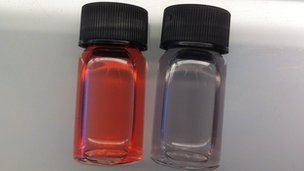
British researchers have developed a cheap test which could detect even low levels of viruses and some cancers.
The colour of a liquid changes to give either a positive or negative result.
Researchers from Imperial College London say the device could lead to more widespread testing for HIV and other diseases in parts of the world where other methods are unaffordable.
The prototype, which needs wider testing, is described in the journal Nature Nanotechnology.
The test can be configured to a unique signature of a disease or virus – such as a protein found on the surface of the HIV.

If that marker is present it changes the course of a chemical reaction. The final result is blue if the marker is there, red if the marker is not.
The researchers say this allows the results to be detected with “the naked eye”.
Prof. Molly Stevens said: “This method should be used when the presence of a target molecule at ultra-low concentration could improve the diagnosis of disease.
“For example, it is important to detect some molecules at ultra-low concentrations to test cancer recurrence after tumor removal.
“It can also help with diagnosing HIV-infected patients whose viral load is too low to be detected with current methods.”
Early testing showed the presence of markers of HIV and prostate cancer could be detected. However, trials on a much larger scale will be needed before it could be used clinically.
The researchers expect their design will cost 10 times less than current tests. They say this will be important in countries where the only optifons are unaffordable.
Fellow researcher Dr. Roberto de la Rica said: “This test could be significantly cheaper to administer, which could pave the way for more widespread use of HIV testing in poorer parts of the world.”