

Stem cells given alongside a kidney transplant could remove the need for a lifetime anti-rejection treatment with immune-suppressing drugs, say scientists.
Early tests of stem cells injection alongside a kidney transplant at US hospitals were successful in a small number of patients.
According to the journal Science Translational Medicine, the majority no longer need anti-rejection medication.
Researchers said it could have a “major impact” on transplant science.
One of the key problems associated with organ transplantation is the risk that the body will “recognize” the new organ as a foreign invader and attack it.
To prevent this, patients take powerful drugs to suppress their immune systems, and will have to do this for life.
The drugs come at a price, preventing organ rejection but increasing the risk of high blood pressure, diabetes and serious infection.
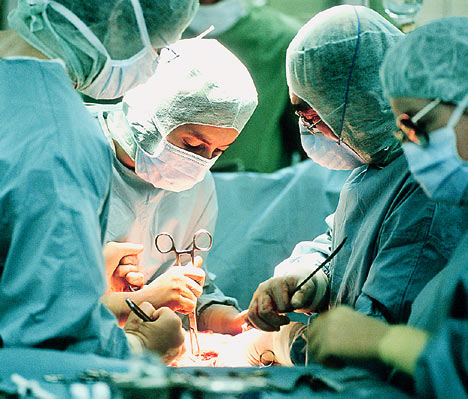
The study, carried out at the University of Louisville and the Northwestern Memorial Hospital in Chicago, involved eight patients.
Their transplant came from a live donor, who also underwent a procedure to draw stem cells, the building blocks of their immune system, from the blood.
The transplant recipient’s body was prepared using radiotherapy and chemotherapy to suppress their own immune system.
Then the transplant went ahead, with the stem cells put into their body a couple of days later.
The idea is that these will help generate a modified immune system that no longer attacks the organ or its new owner.
Although the patients started off with the same anti-rejection drugs, the aim was to reduce these slowly, hopefully withdrawing them completely over time.
Five out of the eight patients involved in the trial managed to do this within a year.
One of those is 47-year-old Lindsay Porter, from Chicago.
Lindsay Porter said: “I hear about the challenges recipients have to face with their medications and it is significant.
“It’s almost surreal when I think about it because I feel so healthy and normal.”
Dr. Joseph Leventhal, associate professor of surgery at Northwestern University Feinberg School of Medicine, said: “The preliminary results from this ongoing study are exciting and may have a major impact on organ transplantation in the future.”
He said that, as well as kidney patients, the technique might improve the lives of those receiving other organs.
While stem cells from organ donors have been used before, this is the first time it has been used for “mismatched” transplants, in which donors and recipients do not have to be related and immunologically similar.