
Happiness can deter non violent crime and drug use in adolescents.
Risk of autism recurrence in siblings is higher than thought.
[googlead tip=”vertical_mediu” aliniat=”stanga”] The University of Michigan Health System researchers said stem cell could offer new hope for unlocking the secrets of bipolar disorder.
A new project begins at the University of Michigan as the Heinz C. Prechter Bipolar Research Fund marks ten years in the search for a cure of bipolar disorder.
According to a University of Michigan Health System statement posted on its website on August 22, the new stem cell lines developed from the skin of adults living with bipolar disorder are providing researchers at the University of Michigan Health System an unprecedented opportunity to delve into the genetic and biological underpinnings of the devastating mood disorder.
Scientists will be able to link new findings – such as how gene expression is affected by different medications – to extensive clinical and demographic data from the cell donors, who are also participants in an ongoing long-term study of hundreds of individuals with bipolar disorder.
The new research comes as the Heinz C. Prechter Bipolar Research Fund, based at the University of Michigan Depression Center, prepares to mark the 10th anniversary of its establishment by Waltraud “Wally” Prechter following the July 2001 death of her husband, Heinz. Before he took his life, few people knew that the well-known automotive entrepreneur wrestled with bipolar disorder.
“Currently the best treatments for bipolar disorder are only effective for 30 percent to 50 percent of patients,” said Melvin McInnis, M.D., the Thomas B and Nancy Upjohn Woodworth Professor of Bipolar Disorder and Depression at the University of Michigan Medical School and associate director at the University of Michigan Depression Center.
“New discoveries have been limited, in part due to the lack of access to tissue and cells from individuals with bipolar disorder. But that is now changing because of the Prechter research program and advances in stem cell research.”
The new stem cell lines – among the first to be created by the A. Alfred Taubman Medical Research Institute Consortium for Stem Cell Therapies – were made from fibroblasts from skin samples donated by adult research volunteers both with and without bipolar disorder.[googlead tip=”patrat_mic” aliniat=”dreapta”]
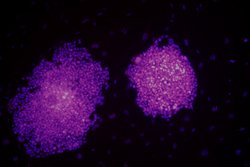
In the lab, scientists can coax these skin cells into behaving like embryonic stem cells. Known as induced pluripotent stem cells, or iPSC, these, in turn, can be manipulated to develop into different types of body cells, including brain cells.
“We will be able to see if there are differences in how the neurons of a person with bipolar disorder make connections, determine how they respond to different medications and explore potential deficiencies in signaling pathways,” explained Sue O’Shea, Ph.D., a professor of cell and developmental biology at the Medical School who leads the stem cell lab with Gary Smith, Ph.D, professor of obstetrics and gynecology.
“So far, five lines have been created. The goal, is to develop 30 cell lines – 20 from people with bipolar disorder and 10 control subjects. Creating each line is a painstaking and expensive process.”
“We often think of stems cells being used in therapies to treat disease, but this is a great example of stem cells’ usefulness for studying the mechanisms of disease.”
“The iPS cells renew themselves, so they’re an unlimited source of material and offer hope to individuals with bipolar disorder.”
Still, the researchers caution, new treatments spurred by this work could be a decade or more away.
Bipolar disorder, formerly known as manic depression, affects 5.7 million adults in the United States. It is caused by chemical imbalances in the brain and marked by significant changes in mood, thoughts, energy and behavior.

[googlead tip=”lista_medie” aliniat=”dreapta”]Because bipolar disorder runs in families, research at University of Michigan (U-M) has focused on studying disease genes. There is no single gene that “causes” someone to become bipolar, but the disease has its roots in genetic vulnerabilities.
The Prechter Bipolar Genetic Repository already houses more than 1,500 genetic samples from people with bipolar disorder and healthy controls from studies at U-M along with collaborating sites: Johns Hopkins, Stanford, Cornell and Penn State. It is the first independently funded bipolar genetics repository in the nation. In addition to sharing the knowledge between the different universities, confidential, coded DNA repository samples and clinical information will be made available to scientists worldwide to accelerate and share clinical breakthroughs in evaluating and treating bipolar disorder.
The Prechter longitudinal study has already collected more than 5 years’ worth of data.
“I’m really proud that over the last 10 years my husband’s legacy has grown to include the strides we’re making to understand bipolar disorder and find new treatments,” Wally Prechter says.
“Bipolar is like any other illness – cancer, diabetes, heart disease – and deserves the same urgency.”
“That lack of effective treatment is a big reason for the high risk of suicide or suicide attempts among people with bipolar disorder. Anywhere from 5% to 15% of bipolar patients will attempt or commit suicide sometime in their lives,” said McInnis.
“Depression caused by Heinz Prechter’s bipolar disorder affected his whole being,” said Wally Prechter.
“He was extremely exuberant and happy, and very, very optimistic, to the point that I thought, ‘Wow, I’ve never met anyone like that.’ But when he was depressed it was to the point that he would stay home and just sit in a chair and look out at the river,” she said.
The memory of how her brilliant husband was reduced to such a low, unable to tell anyone what he was going through, is part of what continues to drive her today.
U-M Health System CEO and Executive Vice President for Medical Affairs Ora Hirsch Pescovitz, M.D., points to the research as a great example of the strides that can be made when public institutions and private donors collaborate on research that benefits the public.
“The Prechter research shows how we continue to fuel innovation through exciting collaborations that highlight our commitment to bench-to-bedside medical advances,” Pescovitz said.
“We are very fortunate to have Wally and her family as part of our Michigan family.”
Mental illness has so much stigma. That’s what keeps people from speaking up. I am only just now beginning to be able to talk about abuse and anxiety I suffer from. It’s a long road.